
Face Grain vs End Grain Wood Plugs — What's the Difference
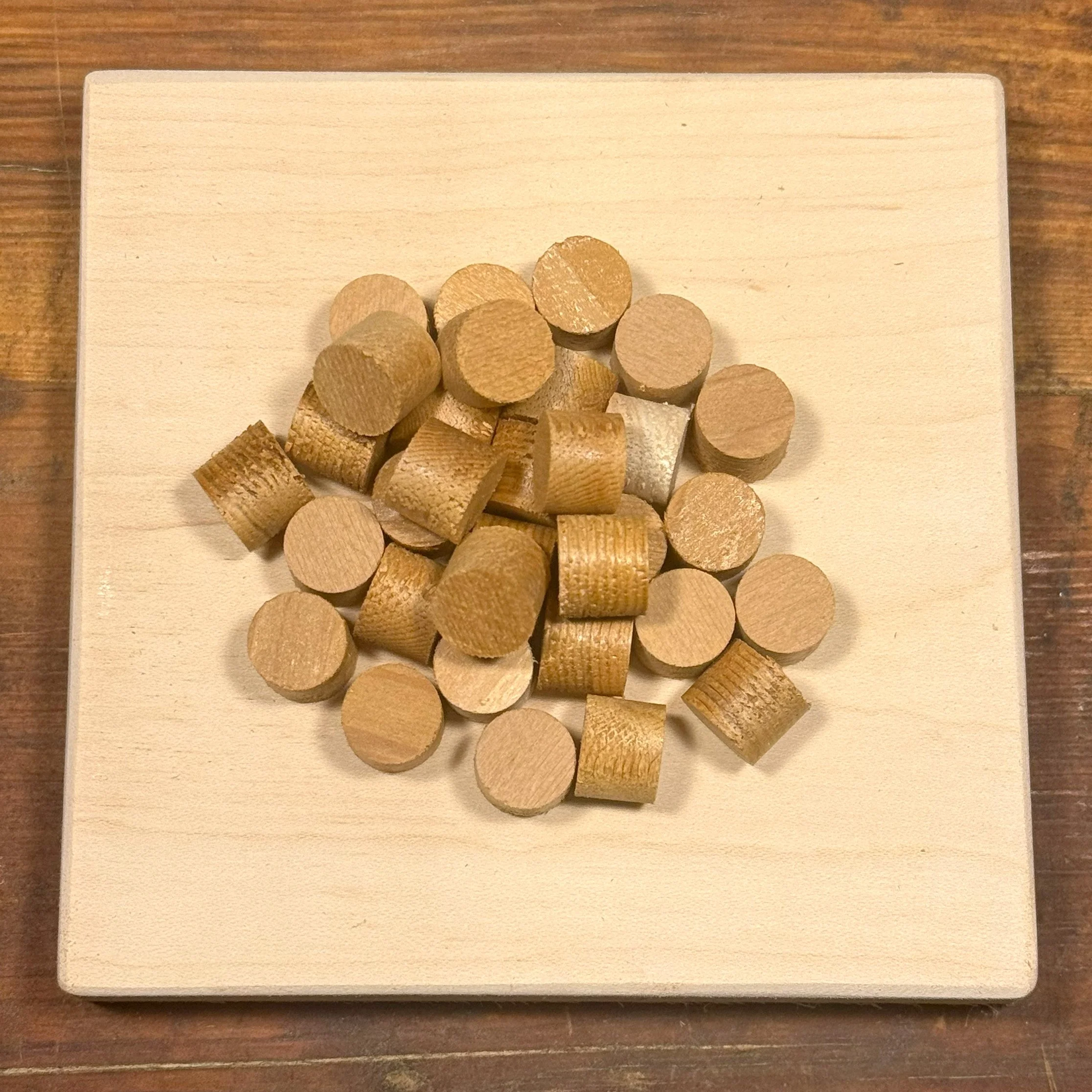
If you've ever installed a wood plug and had it look slightly off — a little pale, a little rough, a little out of place — there's a good chance the problem wasn't the species or the finish. It was the grain orientation.
Most wood plugs on the market are end grain. A few are face grain. The difference is significant, and once you understand it you'll never look at a plug the same way again.
How Wood Plugs Are Cut
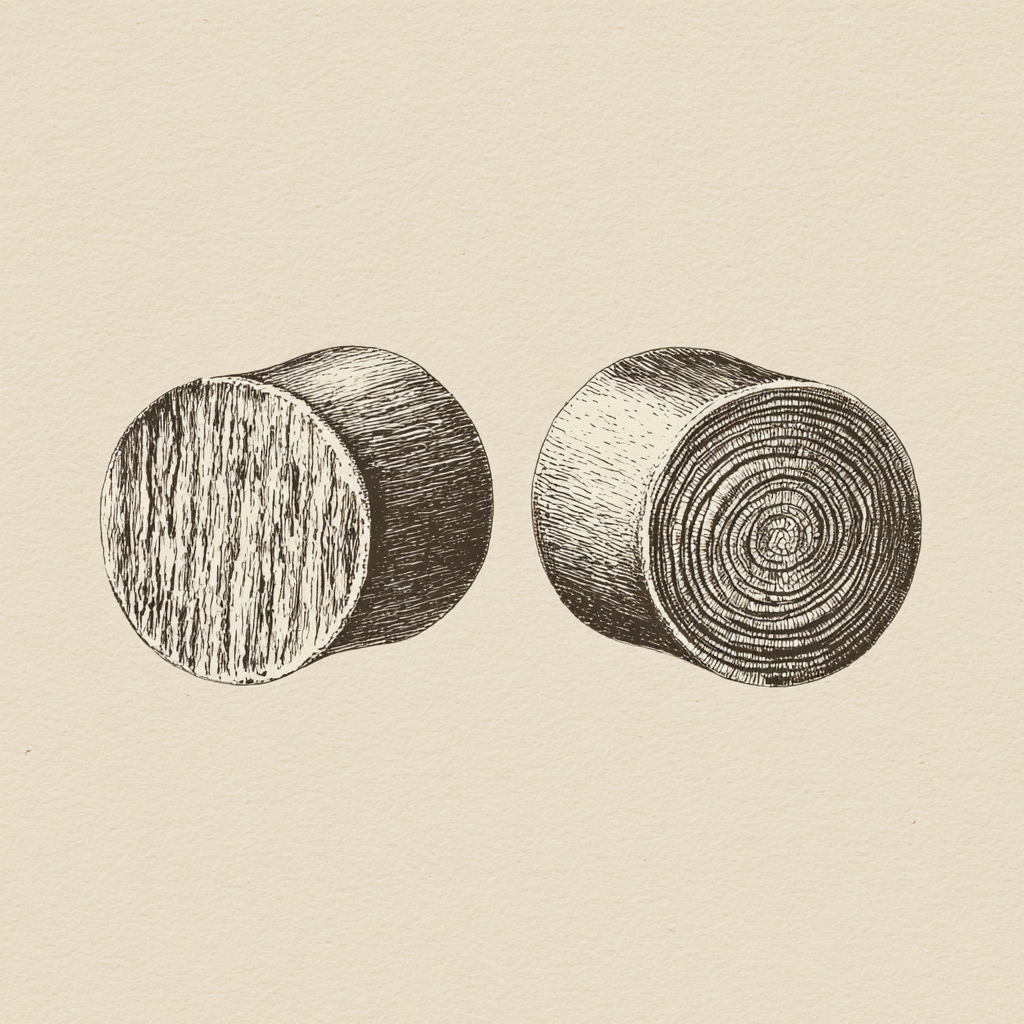
Face Grain vs End Grain
The grain orientation is determined by how the plug is cut from the board
To understand grain orientation you need to think about how a plug is cut from a board.
A board has three distinct faces. The face grain is the wide, flat surface you see when a board is lying flat — the surface with the growth rings running across it. The edge grain is the narrow side of the board. The end grain is what you see when you cut straight across the board — the raw end showing the growth rings head on, like looking at a tree from above.
End grain plugs are cut by drilling straight into the end of a board or a dowel. The result is a plug where the growth rings are running straight up and down through the plug — perpendicular to the face you see after installation.
Face grain plugs are cut differently. A plug cutter is driven into the flat face of a board, so the growth rings run across the top of the plug just like they run across the surface of the surrounding wood.
That difference in how they're cut determines everything about how they look installed.
Why It Matters After Installation
When a face grain plug is installed and cut flush, the surface you see matches the surrounding wood naturally. The growth rings on the plug face are oriented the same direction as the growth rings in the board around it. When you apply stain or finish, the plug absorbs it at the same rate as the surrounding wood because the grain structure is identical. The result is a plug that disappears into the surface — which is exactly what you want.
End grain plugs behave differently. End grain is porous and absorbs finish much faster than face grain. Apply a stain over an end grain plug and it goes noticeably darker than the surrounding wood. Even on unstained projects the end grain surface has a different visual texture — tighter, more linear, almost mechanical looking compared to the natural flow of face grain. An experienced eye spots it immediately.
For projects where the plugs are meant to blend — furniture, cabinetry, interior millwork, fine woodworking — end grain is a visible compromise. For projects where the plug is purely structural and will be painted over, it matters less. But if you're working with natural or stained wood and you want a clean result, face grain is the only real option.
The Practical Differences in Installation
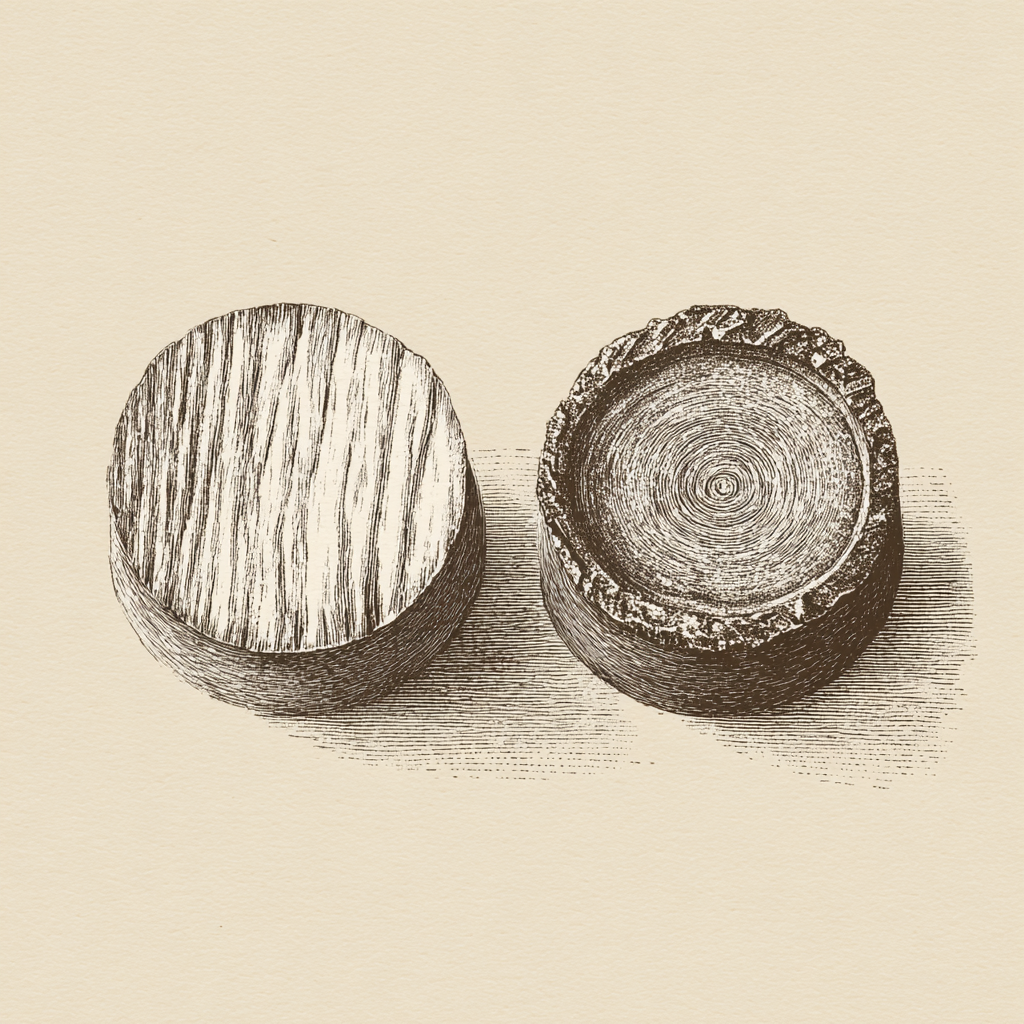
What You See After Installation
Face grain lines blend with the surrounding wood. End grain rings stand apart.
Face grain and end grain plugs install the same way — drill your hole with a countersink or Forstner bit, apply a small amount of glue, set the plug, cut flush, sand smooth. The process is identical.
The difference shows up at the finishing stage. Face grain plugs sand flush cleanly and accept finish uniformly. End grain plugs can telegraph through even a heavy finish coat if the grain contrast is significant.
One thing worth noting: face grain plugs require a higher quality piece of source material to cut from. You can't cut a face grain plug from just any board — the grain needs to be straight, consistent, and clear to produce a plug that actually performs. That's why hand selecting the source lumber matters. A face grain plug cut from a clear, well-figured board is a fundamentally different product than one cut from whatever stock happens to be available.
Which Species Shows the Difference Most
The face grain advantage is most visible on species with strong, readable grain character — white oak, cherry, walnut, Douglas fir. These are species where the growth ring pattern is part of the visual appeal of the wood, and a face grain plug preserves that pattern through the plug surface naturally.
On lighter, more uniform species like hard maple or alder the difference is subtler but still real, particularly when stain is involved.
On species used primarily for their color rather than grain — padauk, bloodwood, purpleheart — grain orientation matters less visually, but face grain still performs better with finish absorption and surface consistency.
The Bottom Line
If you're buying wood plugs for a project where appearance matters, check the grain orientation before you order. End grain plugs are more common because they're faster and cheaper to produce. Face grain plugs take more material, more care in sourcing, and more precision in cutting — but the result speaks for itself when the finish goes on.
One exception worth noting — for structural applications like dowel joinery, end grain orientation is actually stronger. When a dowel runs parallel to the wood grain the long fibers carry the load. For plugs covering fasteners that's irrelevant, but if you're joining two boards with dowels you want a true dowel, not a long plug.
If you're browsing my shop, every plug you see is cut from face grain. If you've been using end grain plugs and wondering why the finish never quite matched — that's your answer.